
The Groove 266 - Why Every Museum Feels Like a Movie Trailer
Welcome to the 266th issue of The Groove.
I am Maria Brito, an art advisor, curator, and author based in New York City.
If you haven’t done so, please subscribe here, to get The Groove in your inbox for free every Tuesday.
WHY EVERY MUSEUM FEELS LIKE A MOVIE TRAILER
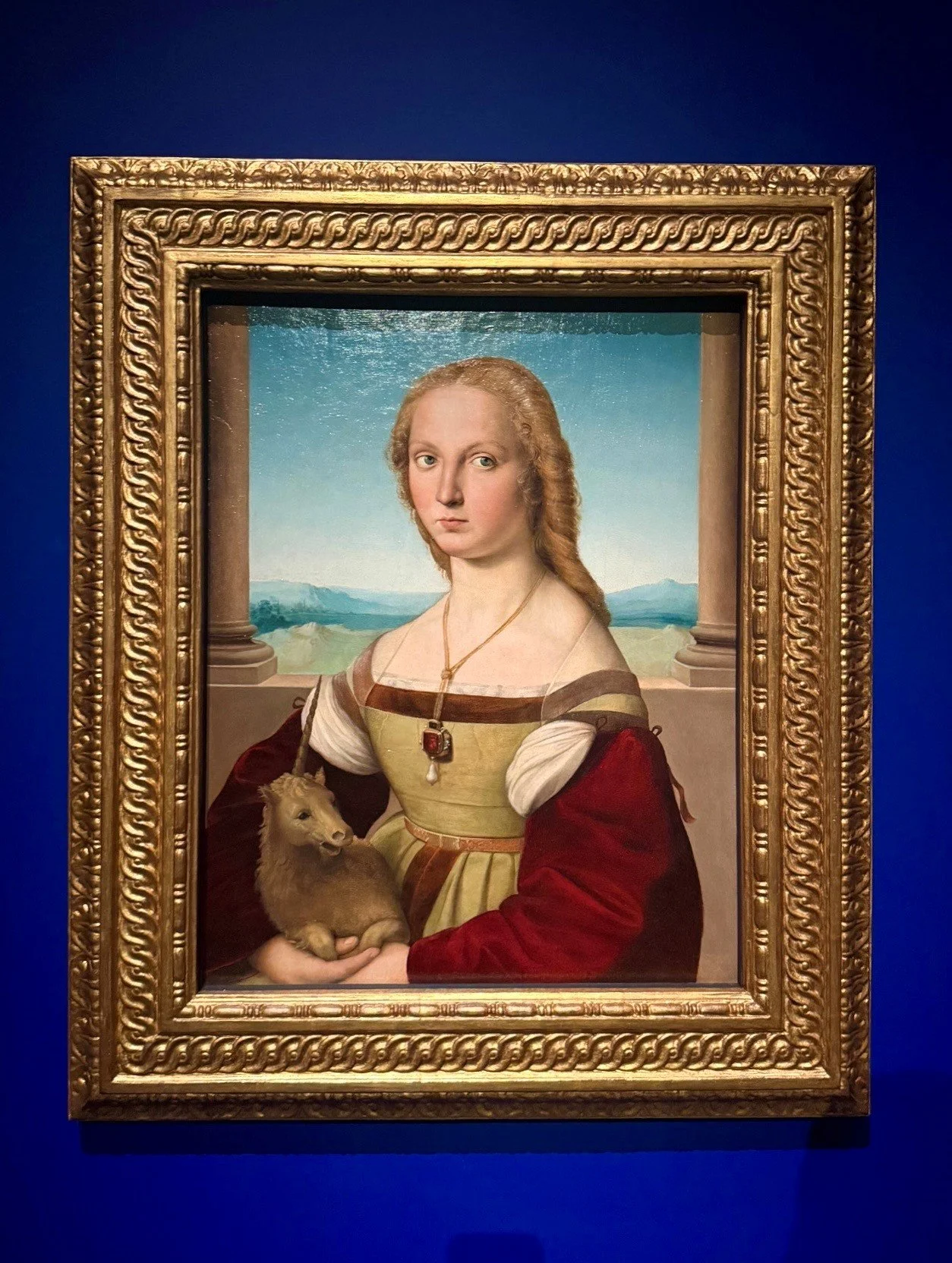
Raphael, Portrait of a Young Woman with a Unicorn, 1505-6, oil on wood. Currently at The Met in New York for the blockbuster show, Raphael Sublime Poetry.
2026 feels like the museum version of a streaming TV season: every institution is dropping a “must-see” with a title that reads like a push notification. Raphael at the Met. Duchamp at MoMA. Lichtenstein at the Whitney. The kind of names that don’t need an introduction, because the introduction is the name.
Museum calendars have been shaped by competition. Not between museums for curatorial glory (that part is eternal), but for time: the same limited hours people once saved for the museum are now being eaten by Netflix, TikTok, and the permanent emergency of an endless newsfeed. The race for attention is real.
The result is a new cultural custom: museums are programming like streamers. Recognizable titles anchor the season. “Events” become the unit of attention. And the audience (collectors included) starts to behave the way audiences behave everywhere: they binge the obvious, postpone the unfamiliar, and call it “taste.”
The Trailer Era
A museum show now arrives with a movie trailer vibe: the hook is immediate, the promise is clear, and the friction is removed. You don’t need prior knowledge. You don’t need context. You just need to show up and feel like you’re seeing something important. The name does the work that wall text used to do.
This is partly survival. The operational costs of museums have ballooned in the last two decades and the stakes of attendance are higher when government funds are dwindling. They need board confidence, donor enthusiasm and press momentum. Big-name “events” are a rational response to an irrational environment. In an attention economy, scholarship still matters, but it needs a headline.
There’s also a hidden cost: when museums build seasons around instant recognition, they retrain the public to confuse familiarity with value. People leave thinking, I understand art, I saw Raphael. Not wrong, but it’s incomplete. The deeper habit museums used to teach, which was curiosity for the unknown, has been replaced by cultural box-checking.
What Gets Lost (and Who Pays)
Don’t get me wrong, the Raphael show is sublime and one of the best I’ve seen in my life. Duchamp back at MoMA is a fabulous event. Lichtenstein’s return to the Whitney after more than 20 years is something I am looking forward to seeing.
But because of these blockbuster exhibitions, mid-career artists feel this shift first. They’re not old enough to be “historical necessity,” and they’re not young enough to be a “hot discovery.” They’re the hardest sell to a streaming-style calendar because they don’t come with a built-in audience. Their work requires something museums have less and less room for: sustained attention without guaranteed payoff.
Scholarship also gets distorted. Not because curators have become less serious- in fact many are heroic - but because the institution is under pressure to justify itself in metrics. Visitors, press, sponsors, social engagement. This nudges museums toward what can be marketed cleanly and away from what is intellectually messy, slow, or unfamiliar.
And collectors absorb all of it. When the museum trains the public to treat “recognizable” as “safe,” buying starts to follow that logic: name-premium rises while under-recognized work that might actually be the future waits longer for its moment. The market begins to borrow the museum’s anxieties, and the museum begins to borrow the market’s speed. Everything starts to look like each other.
The Counter-Move
Here’s the part that interests me. Even in the trailer era, museums still have one power many other attention-seeking platforms don’t: they can change what people care about. The question is whether they still have the courage to spend cultural capital on artists who don’t arrive with it.
The smartest programming now isn’t “blockbuster vs. experimental,” but instead uses the famous show as a front door and the riskier show as the real education. The best institutions are the ones that understand this: they know that the Raphael show brings people in, but that other show in the smaller gallery is the one that builds future taste.
This is the fork in the road: museums can either become streaming platforms with better lighting, or they can stay places that expand the public’s capacity to see.
If you’re a collector, an artist, or even just a person trying to stay human in 2026, pay attention to which institutions are solidifying recognition and which ones are still teaching discovery.