
The Groove 268 - What Art Market Headlines Don’t Say and What They Still Reveal
Welcome to the 268th issue of The Groove.
I am Maria Brito, an art advisor, curator, and author based in New York City.
If you haven’t done so, please subscribe here, to get The Groove in your inbox for free every Tuesday.
WHAT ART MARKET HEADLINES DON’T SAY AND WHAT THEY STILL REVEAL
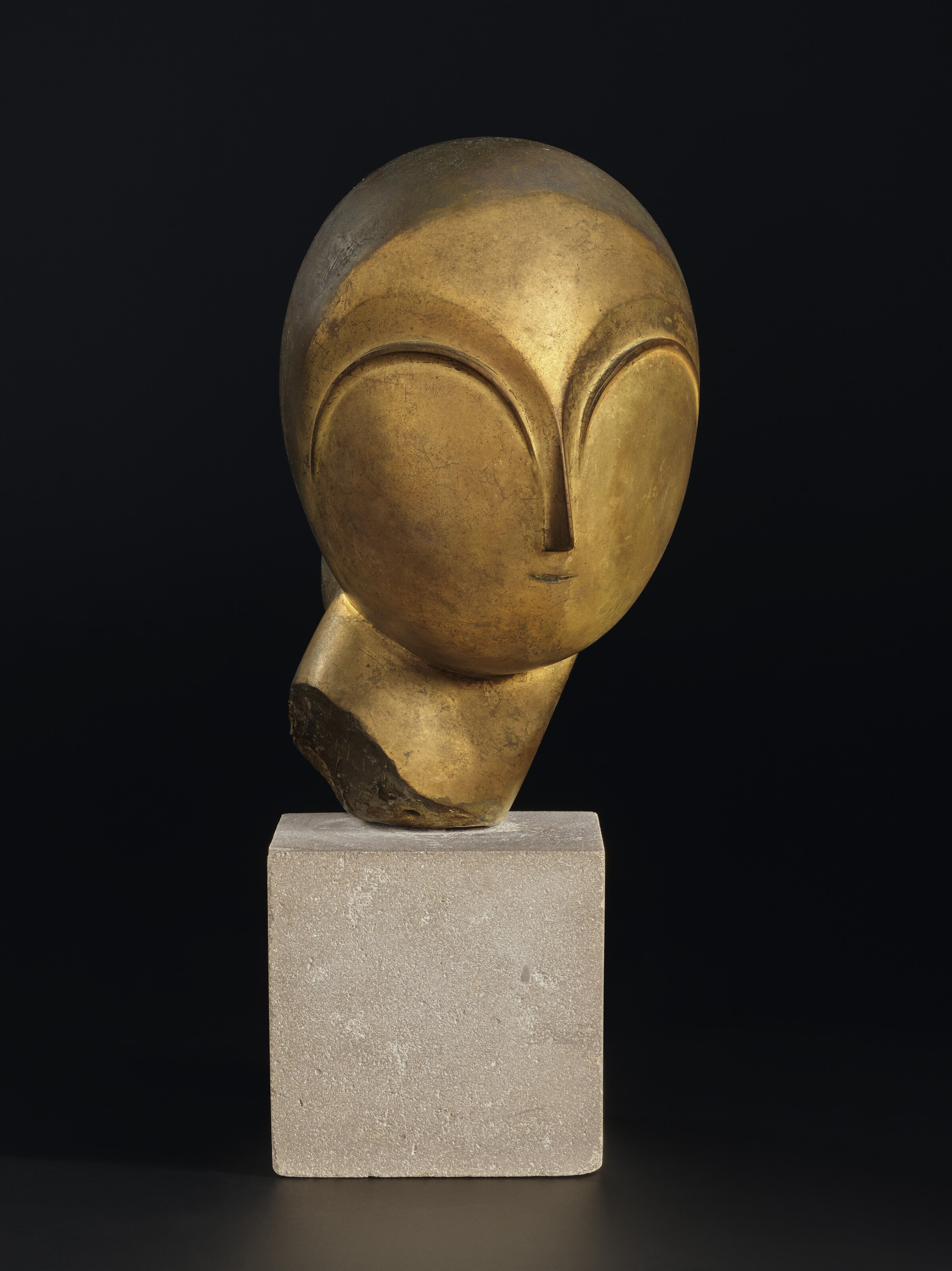
Constantin Brancusi, Danaïde, conceived and cast circa 1913. Bronze with gold leaf and black patina. Sold for $107,585,000 at Christie’s in New York on May 18th, 2026.
The last two weeks in New York felt like the art world’s version of a triple-header: Frieze, Independent, NADA, and TEFAF colliding with May auctions, with the Venice Biennale opening still in our bloodstream. Everyone was everywhere, looking at everything, pretending they weren’t tired, and then going home to scroll through results like they were sports scores.
And the scores were high. Christie’s sold Jackson Pollock’s Number 7A, 1948 for $181.2 million and Brancusi’s Danaïde for $107.6 million, both from the S.I. Newhouse estate trove. Sotheby’s, not to be outdone, hammered a monumental Rothko from Robert Mnuchin’s collection at $85.8 million (with fees). And Christie’s also set a Rothko auction record with Agnes Gund’s No. 15 (Two Greens and Red Stripe) at $98.4 million. Around $2.1 billion in art was sold among Sotheby’s, Christie’s and Phillips last week.
These are not “normal” art purchases. They’re a different category of buying altogether: one part culture, one part capital, one part mythology. Which is why, in the same week, I met a woman who asked me a question that sounded naive but wasn’t: why does the art market feel so small and weak compared to the stock market? Especially now, when everyone is salivating over the upcoming tech IPO parade (SpaceX, OpenAI, Anthropic)?
That question is the tension at the heart of this moment: we love art as a human achievement, but we keep talking about it like stock.
The Trophy Room and the living room
A $181 million Pollock is not a living-room decision. It’s a historical object changing hands in public, with the whole industry watching. A seven-minute bidding war isn’t just commerce. Auction houses understand this perfectly: they aren’t only selling objects, but a piece of history set on a global moment of consensus.
But most of the art world doesn’t run on nine-figure lots. It runs on the thousands of quiet transactions that don’t get reported: a mid-career painter with a twenty-year practice; a sculpture that actually lives in a home; a drawing that becomes someone’s daily companion. That’s why these headline prices feel both intoxicating and alienating. They’re real and they’re also unrepresentative.
The danger is that the headlines start colonizing how everyone thinks. Collectors begin to measure their own purchases against trophy numbers. Artists begin to resent dead artists for absorbing attention. And the whole ecosystem starts acting as if “worth” is synonymous with “record.” It isn’t. It’s just the most public form of value
why the art market is small
The lady who asked me the question about the size of the art market isn’t wrong. Compared to global equities, the art market is tiny. The Art Basel & UBS Global Art Market Report puts 2025 global art sales at about $59.6 billion, a rounding error next to public markets. U.S. stock market capitalization alone was around $69.2 trillion in late 2025 (and global equities are larger still).
About 62% of Americans own stock (often through a 401(k) or retirement account), but the art market feels distant to most people because you can’t ‘auto-enroll’ into a Basquiat the way you auto-enroll into an index fund.
But “small” doesn’t mean “weak.” It means art is not designed to behave like stocks. Art is illiquid. It’s heterogeneous. Two works by the same artist can be priced radically different because condition, period, scale, and provenance aren’t footnotes, they’re the whole story. There’s no continuous trading, no daily price tape, no easy shorting, no index funds vacuuming up supply every payday. (If anything, the friction is the feature.)
And that friction is why art retains its strange power. Stocks are pure abstraction; you don’t live with your shares of Nvidia taped to the wall. Art is an asset you can look at, argue with, and pass down. It’s culture and a piece of history you can literally keep in your house. That makes it a terrible stock substitute.
Why Dead Artists Keep Winning the Headlines
Artists sometimes complain that the market’s obsession with dead artists is unfair, as if there should be a socialist blanket where everyone gets paid evenly. I understand the frustration. But the market is not paying for “life” versus “death.” It’s paying for scarcity + certainty.
Jackson Pollock cannot make more Pollocks. The supply is closed. The scholarship is mature. The museum status is settled. The provenance can be documented back through decades of institutions and collectors. In financial terms, those are de-risking mechanisms. A living artist, by definition, is still in motion: the work can evolve, output can surge, galleries can over-supply, taste can swing. That doesn’t mean living artists aren’t valuable, but it means the market is pricing against different kinds of uncertainty.
The real issue isn’t that “dead artists get attention.” It’s that our culture confuses attention with meaning. The Pollock headline is a shock-and-awe number. A living artist has a slow build with studio visits, museum group shows, gallery representation, thoughtful collectors, consistent practice. But it’s often where the future is actually being written.
What These Numbers Should Remind Us
Here’s the sane way to hold both truths. Yes: the trophy end of the market is real, and the numbers are staggering. And yes: those numbers don’t represent the reason most of us love art, or the way art functions in civilization.
Art matters because it outlasts us. It holds memory. It turns private obsession into public form. It makes the invisible visible: emotion, politics, time, beauty, dread, desire. No stock certificate does that. So when the art world gets drunk on auction results, the corrective isn’t moral outrage. It’s perspective. The record price is a headline; the lived relationship is the point.
If the stock market is the world’s giant prediction machine, art is the world’s meaning machine. It moves slower, trades less, and matters longer. The prices grab attention. The objects, when they’re great, earn it.