
The Groove 269 - The Gallery Business Is a Knife Fight
Welcome to the 269th issue of The Groove.
I am Maria Brito, an art advisor, curator, and author based in New York City.
If you haven’t done so, please subscribe here, to get The Groove in your inbox for free every Tuesday.
The Gallery Business Is a Knife Fight
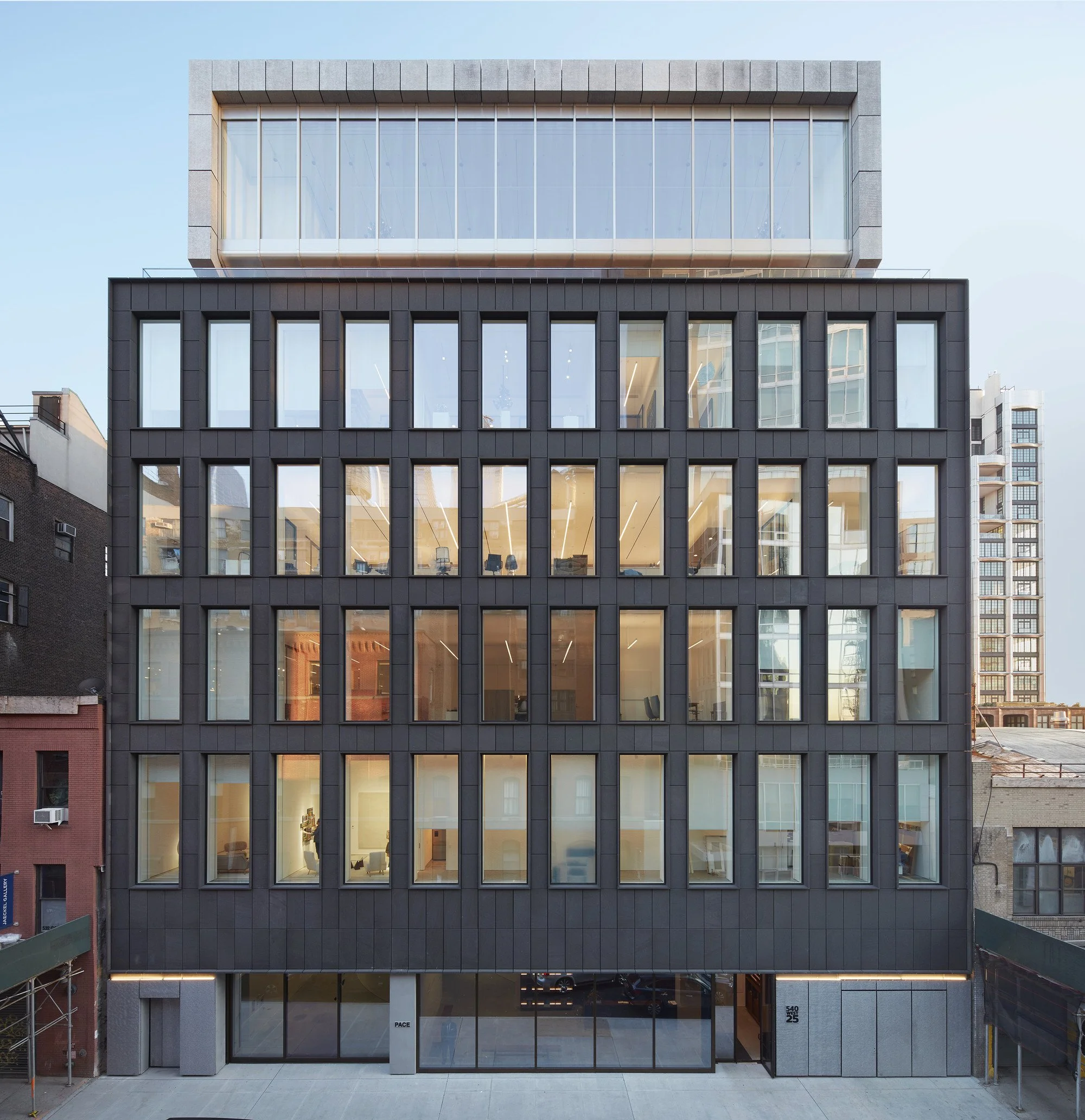
Pace Gallery on West 25th Street.
Artists love to complain about the split. “Why do I have to give a gallery 50 percent?” Some are even on 60/40. I get it. You made the work. You paid for the materials, the studio, the time, the doubt. It feels insane to cut a check to someone who didn’t paint a single brushstroke.
But the discourse always skips the part that matters: a serious gallery in a major city is not a romantic salon. It’s a high-overhead operating business that behaves like a production company, a logistics firm, a PR shop, and a museum-adjacent institution all at once. Most months, revenue isn’t steady. It’s lumpy, seasonal, and brutally dependent on one good fair, one good quarter, one collector’s yes.
The last two years have been a grind, full of closures, downsizings, consolidations. Some gallery owners aren’t great business people, sure. But there’s a lot more than meets the eye.
Even a sophisticated operation can decide the math no longer works: British gallerist Timothy Taylor closed his Tribeca outpost after less than three years while keeping the London one up and running. Stephen Friedman went down in New York after two years and in London after 30 years. Pace Gallery, considered one of the four mega-galleries, announced last week that it was cutting 50 people from the staff and getting rid of 50 artists from its roster.
Today, the art press reported that the New York branch of Galerie Templon who is headquartered in Paris, is also shutting down after the landlord imposed a hike on the $55,000 a month rent of their 6500-square-foot Chelsea space.
The Numbers Don’t Lie
Let’s start with rent, because galleries need a physical space to show art. Tribeca (and other Manhattan neighborhoods where galleries like to plant flags) is not cheap retail real estate. Current listings for street-level retail in Tribeca commonly show asking rents in the rough neighborhood of $120–$226 per square foot, per year, depending on the space, location, and condition. That means a 2,000 sq ft ground-floor gallery can easily start at $240,000–$450,000/year in base rent alone before you hang one painting.
Then there’s payroll. Even lean galleries need staff who can actually run a professional operation: director(s), sales/admin, registrar/ops, installers and handlers on call. Plus insurance that includes property, liability, umbrella, and art coverage at a moment when insurance markets have broadly repriced risk (and many small businesses feel it as “premiums through the roof”).
And then the constant, boring costs nobody posts about: repainting after every show, patching walls, lighting, photography, design, invitations, dinners, openings, travel, storage, crating, shipping, customs brokers, condition checks. A gallery doesn’t sell “objects.” It runs a stage production.
The Art Fair Scaries
Art fairs are now the gallery’s marketing budget and sales floor rolled into one, and they can swallow a year. Booth fees alone at Art Basel can range dramatically by sector, but for the main Galleries section, industry reporting has put them around $85,000–$125,000.
And that’s just the raw booth.
Each gallery has to pay unionized workers to build up the space: paint walls, add switches and install special flooring. Factor in flights, hotels, meals, temporary storage, shipping, art handlers, local transport, crate returns, and the staff time it takes to stand under fluorescent lights explaining the same work 200 times to people who may be shopping, browsing, or just collecting photos. Fairs are a bet. Sometimes they make the year. Sometimes they crush it.
This is why the “they took half my sale” framing is often wrong.
In many cases, the gallery isn’t taking half as profit; it’s recovering the cost of running the machinery that made the sale possible and the machinery that keeps the artist’s career alive after the sale: pacing supply, building collector trust, funding production, maintaining press, and doing the long institutional work that turns a studio practice into a public practice.
The 50 Percent
A serious gallery doesn’t just “take 50 percent.” It spends long before it earns: years of rent to keep a program visible, payroll to run a professional operation, production support to help artists make ambitious work, shipping and crating to get it safely where it needs to go, PR to keep the conversation alive, dinners and studio visits to build real relationships, and endless behind-the-scenes work with curators, institutions, and collectors to place the right works with the right people.
Good galleries do this not because the split is a gold mine (it rarely is), but because they believe in artists and in what physical exhibitions still do for culture.
If you’ve been around the block in the art world for a decade or more, you know that “profit” is often just survival. The real return is seeing an artist’s career level up in public: with better work, better context, better collectors, and real institutional traction. And no, that’s not true of every gallery. But it’s true of the galleries that have lasted long enough to have scars.
And here’s the part artists (and collectors) should take seriously: when galleries close, artists don’t magically become freer. Many get stranded, especially emerging and mid-career artists who rely on the middle tier for consistent exhibitions and collector cultivation. If it becomes impossible to run a serious gallery in New York, London, LA, you don’t get a purer art world. You get a narrower one dominated by auction houses. The middle disappears. Careers shorten. Risk-taking drops. Culture gets poorer.
50-50 splits can feel brutal. And every artist should understand their contract and negotiate intelligently. But if we want real shows, real careers, real institutions, and a thriving physical art ecosystem, then somebody has to pay for the stage. The stage is rent, staff, shipping, PR, insurance, fairs, and a thousand unglamorous acts of care.
The better question isn’t “why do they take 50 percent?” It’s “what does it cost to build an artist’s career in public and who is willing to carry that cost?”
Because most of the galleries still doing it aren’t doing it because it’s easy. They’re doing it because they love the work, they love the artists, and they still believe the white cube, expensive as it is, matters.