
The Groove 270 - The Backrooms Generation
Welcome to the 270th issue of The Groove.
I am Maria Brito, an art advisor, curator, and author based in New York City.
If you haven’t done so, please subscribe here, to get The Groove in your inbox for free every Tuesday.
The BACKROOMS GENERATION
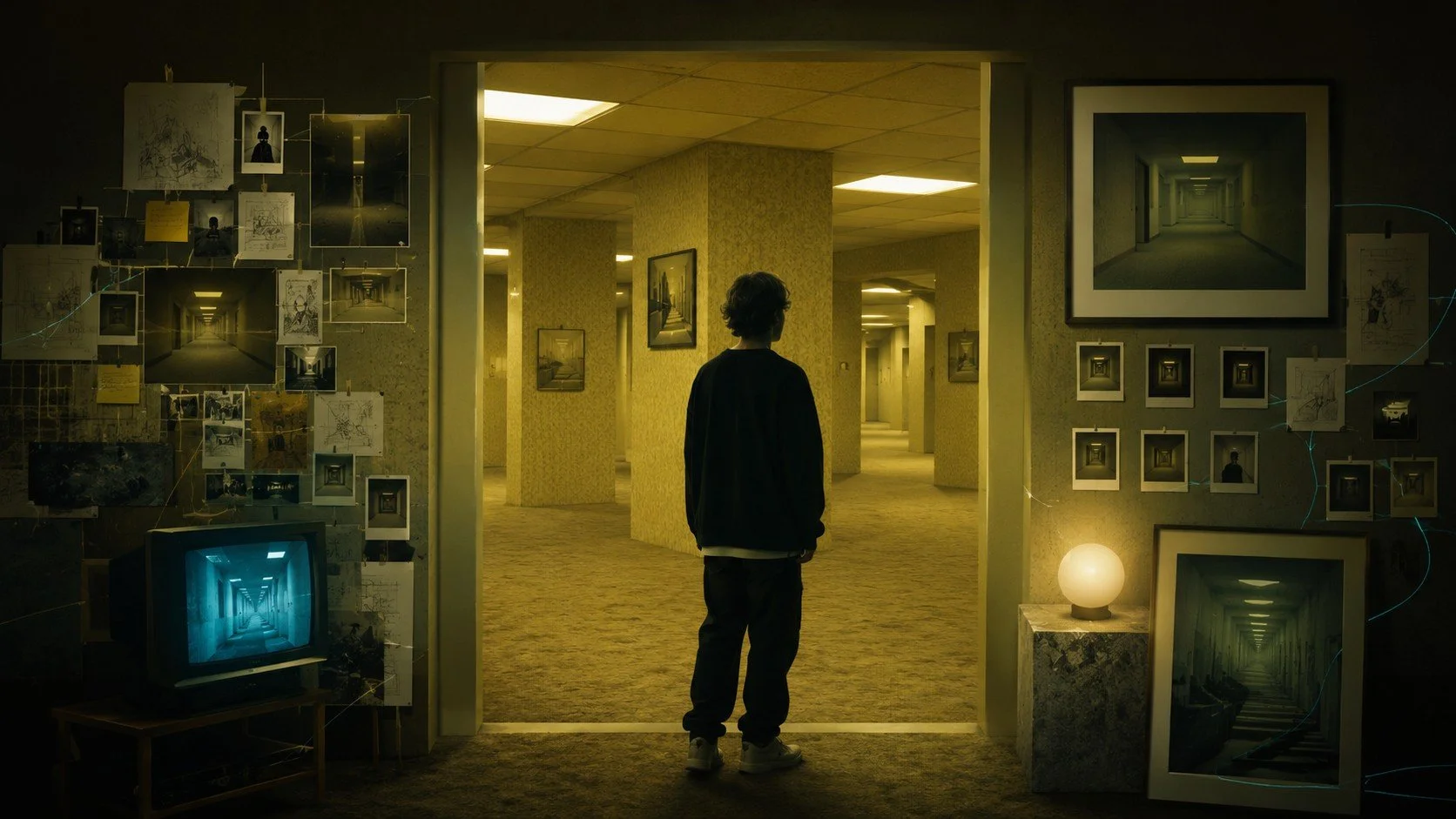
Backrooms and Obsession are giving us clues as to what the next generation of collectors may want.
The biggest box-office stories of the year are not Marvel films, Spielberg aliens, big Hollywood remakes, or musical biopics. They are Obsession and Backrooms: two horror films made by very young, internet-native filmmakers that turned modest budgets into hundreds of millions of dollars.
As of this week, Obsession has crossed $330 million globally. Backrooms is not far behind, sitting around $300 million. These aren’t “indie success stories” but clear cultural flare guns
And what they tell us is not that Gen Z loves horror. That’s too easy. What these successes point at to is that Gen Z will still leave the house, buy a ticket, sit in a room with strangers, bring friends, repeat the experience, and turn something into a social event if the work feels like a portal into a world they already understand.
That is where the fine art world should be paying attention.
Young People Don’t Want Content. They Want a World.
The lazy take is that young people only want their phone screens. But if that were true, Obsession and Backrooms would have stayed online. They didn’t. They became theatrical events because they carried something from the internet into a physical space: mood, dread, intimacy, weirdness, community, and the thrill of being “inside” something.
This generation grew up fluent in immersive environments. They understand liminal spaces, analog horror, YouTube lore, Discord mythology, Roblox worlds, memes that mutate overnight, and fan edits that explain an entire emotional universe in twelve seconds.
They don’t need culture to arrive in a gold frame with a museum voice. They need it to feel alive. That matters for art, because great art has always built worlds. Bosch built one. So did Hilma af Klint, Louise Bourgeois, Mike Kelley, Matthew Barney, Yayoi Kusama. The best painters build worlds all the time: a set of recurring symbols, pressures, colors, fears, jokes, rooms, bodies, codes. The problem is that the fine art world often takes artists who are world-builders and presents them like entries in a graduate seminar.
Gen Z Is Anti-Boredom
Art fairs are now the gallery’s marketing budget and sales floor rolled into one, and they can swallow a year. Booth fees alone at Art Basel can range dramatically by sector, but for the main Galleries section, industry reporting has put them around $85,000–$125,000.
And that’s just the raw booth.
Each gallery has to pay unionized workers to build up the space: paint walls, add switches and install special flooring. Factor in flights, hotels, meals, temporary storage, shipping, art handlers, local transport, crate returns, and the staff time it takes to stand under fluorescent lights explaining the same work 200 times to people who may be shopping, browsing, or just collecting photos. Fairs are a bet. Sometimes they make the year. Sometimes they crush it.
This is why the “they took half my sale” framing is often wrong.
In many cases, the gallery isn’t taking half as profit; it’s recovering the cost of running the machinery that made the sale possible and the machinery that keeps the artist’s career alive after the sale: pacing supply, building collector trust, funding production, maintaining press, and doing the long institutional work that turns a studio practice into a public practice.
The Next Collector Wants Proof of Life
The next generation of collectors will not all look the same. Some will buy exactly what their parents bought because inheritance is real and status is sticky. Some will chase names because markets train people quickly. Some will collect design, fashion, sneakers, watches, games, Pokémon cards, music memorabilia, and art with no anxiety about hierarchy.
But the ones who become genuinely interesting collectors will want proof of life. They will want to feel that an artist is not merely producing inventory but building a language. They will respond to work that has vibes, humor, darkness, beauty and the confidence to be uncool before it becomes cool.
That is what Obsession and Backrooms are telling us. Young audiences are not passive. They are not culturally dead. They are not satisfied with recycled franchises and prestige boredom. They will show up when something feels distinct and made from inside their own cultural landscape.
The art world should listen. Because the next serious collector may not be asking, “Is this important?” They may be asking something much better: “Can I enter this world?”