
The Groove 258 - What an Art Advisor Actually Does
Welcome to the 258th issue of The Groove.
I am Maria Brito, an art advisor, curator, and author based in New York City.
If you haven’t done so, please subscribe here, to get The Groove in your inbox for free every Tuesday.
What an Art Advisor Actually Does
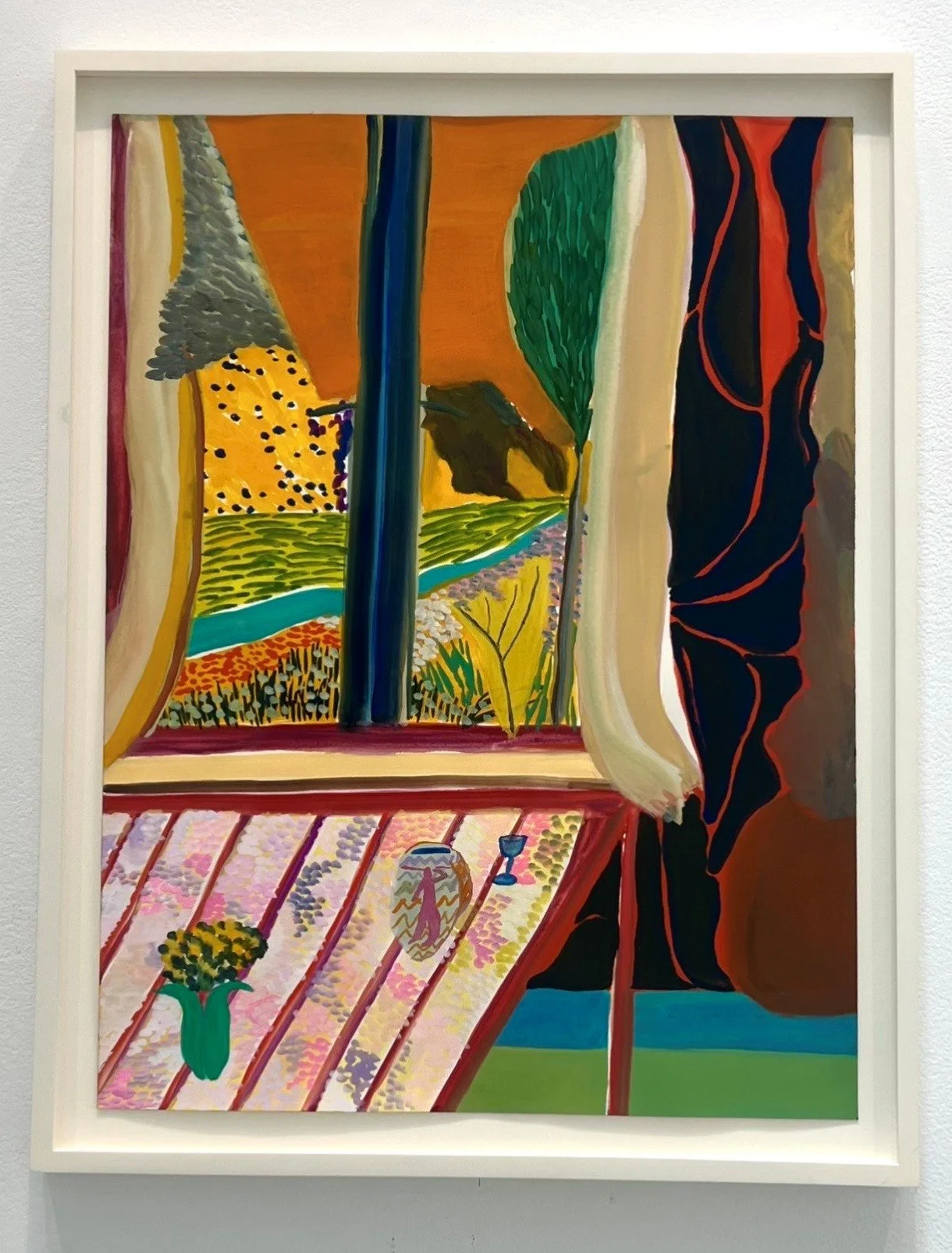
A special Matthew Wong gouache on paper that I secured for a client from a primary-market release by the artist’s estate. Access, timing and judgment aligned. That’s the job of an art advisor.
Many old school, respected art dealers have said: “If collectors have taste, why do they need advisors?” Newspapers love a scandal: one or two advisors behave badly, and suddenly the whole profession is painted as grifters with day-passes to VIP lounges. And now newcomers are saying, “I can do it alone with the help of AI.”
Here’s the truth I’ve learned after 17 years, thousands of art placements and many millions of dollars in sales: collectors do have taste. What collectors don’t have – especially those with a life, a job, a family - is the time to navigate a market with 700+ serious galleries around the world and an equal amount of shows every 5–6 weeks from New York to Hong Kong, political access on the primary market, auctions with footnotes that bite, and secondary pricing still haunted by 2022. In that maze, guessing gets expensive very fast.
I don’t exist because you lack opinions; I exist because incentives are opaque, information is asymmetrical, and timing is everything. My job isn’t to “make you like things.” It’s to keep your taste from being taxed by hype, delays, hidden costs, and the wrong yes at the wrong moment.
The Complaints, Rebutted
“Advisors are just shoppers.” If all I did was forward PDFs, I’d quit. This is a full-time practice: pre-screening 30+ previews a week (50/day in fair weeks), mapping supply across galleries and consignors, reading conditions and provenance like contracts, sequencing asks so we don’t burn an opportunity, and saying no for good reasons.
“Isn’t this proof collectors don’t have taste?” No. It’s proof the market is overwhelmingly big, not intuitive and definitely not crystal clear. Primary placement is political by design; auctions are “transparent” until you factor premiums, irrevocable bids, reserves, and post-sale realities. Secondary dealers quote to the last outlier. Taste without context is like perfect pitch in a busy room, because you still need someone to hold the tuning fork.
“But advisors in the news did X/Y/Z.” These are the ones that the press salivates after, duh! Journalists need stories and make headlines out of these people, but a handful of bad actors don’t define an entire field.
I run on written agreements, disclosed fees, documented conflicts, and an unwavering rule: I’m on the buyer’s side. I don’t flip, I don’t fancy-price to please a seller, and I’d rather lose a deal than win a mistake.
What I Actually Do
Most days look like this: I’m up early reading emails and WhatsApp messages from colleagues and collectors who are in Europe or Asia, then I triage previews and separate what’s good vs. what’s merely available. I maintain live maps of artists’ supply (what galleries have works, what are the upcoming shows, what’s promised to institutions, what’s quietly consigned).
I visit galleries, auction houses, dealers’ showrooms. I run comps that actually compare like-for-like in period, scale, medium, condition, exhibition history. I call conservators if I need an opinion on a condition report. I speak with museum curators who are hoping to secure funding of an acquisition through donations.
Then comes placement. Primary isn’t first-come; it’s fit. I write concise cases for my clients; why this, why now, how it strengthens an existing narrative. On the secondary side, I price-truth everything: condition anomalies, restoration notes, murky editions, cross-border tax traps.
And there are more emails with registrars, shippers, framers, storages, insurance reps, and the unglamorous logistics that keep great objects safe. You can love the art and still outsource the headache.
Where Things Go Sideways
Gallery drama. You finally get the call that there’s one painting by that hot artist available but… it's the wrong series, weak period, incorrect scale. I’ll pass, even if it stings in the moment, because a poor example is a forever anvil. When I push, it’s because the object merits the push.
Auction “clarity.” Everyone sees the estimate; too few model the all-in. Premiums push a “deal” into fantasy, guarantees narrow real bidding, and an outlier comp becomes an incorrect barometer in private pricing. I separate theater from truth and push back against arguments that try to make any C work into a masterpiece.
Secondary mirages. “Fresh to market” doesn’t mean “worth the number.” I’ve unwound deals where condition was euphemized or paperwork was incomplete. I’ve also kept clients from overpaying by 30–40% when sellers pegged asks to 2022 peaks. The goal isn’t to win a negotiation but to avoid a regret.
This is why I work in first principles and eschew trends: quality of example, coherence with your through-line, and price discipline. If that sounds boring, good. The art should be exciting; the process should be boring enough to be safe.
Why Art Advisors Are Needed
Bravo, you’ve got the career, the house, the disposable income, and a real appetite for art. But you barely have time to book a pedicure.
Enter the art advisor. I’m obsessive about service: fast reads, crisp memos, transparent pricing logic, and honest nos. My job is putting you in the right rooms with the right work and directing your budget toward what compounds: meaning, beauty, and durable value.
I love what I do. I’m relentless about protecting my clients. Great taste is the starting line, not the plan. Bring your curiosity and your excitement; I’ll bring the map, the access, and the brakes so you don’t have to do this alone.