
The Groove 261 - How Value Gets Made in Art
Welcome to the 260th issue of The Groove.
I am Maria Brito, an art advisor, curator, and author based in New York City.
If you haven’t done so, please subscribe here, to get The Groove in your inbox for free every Tuesday.
HOW VALUE GETS MADE IN ART
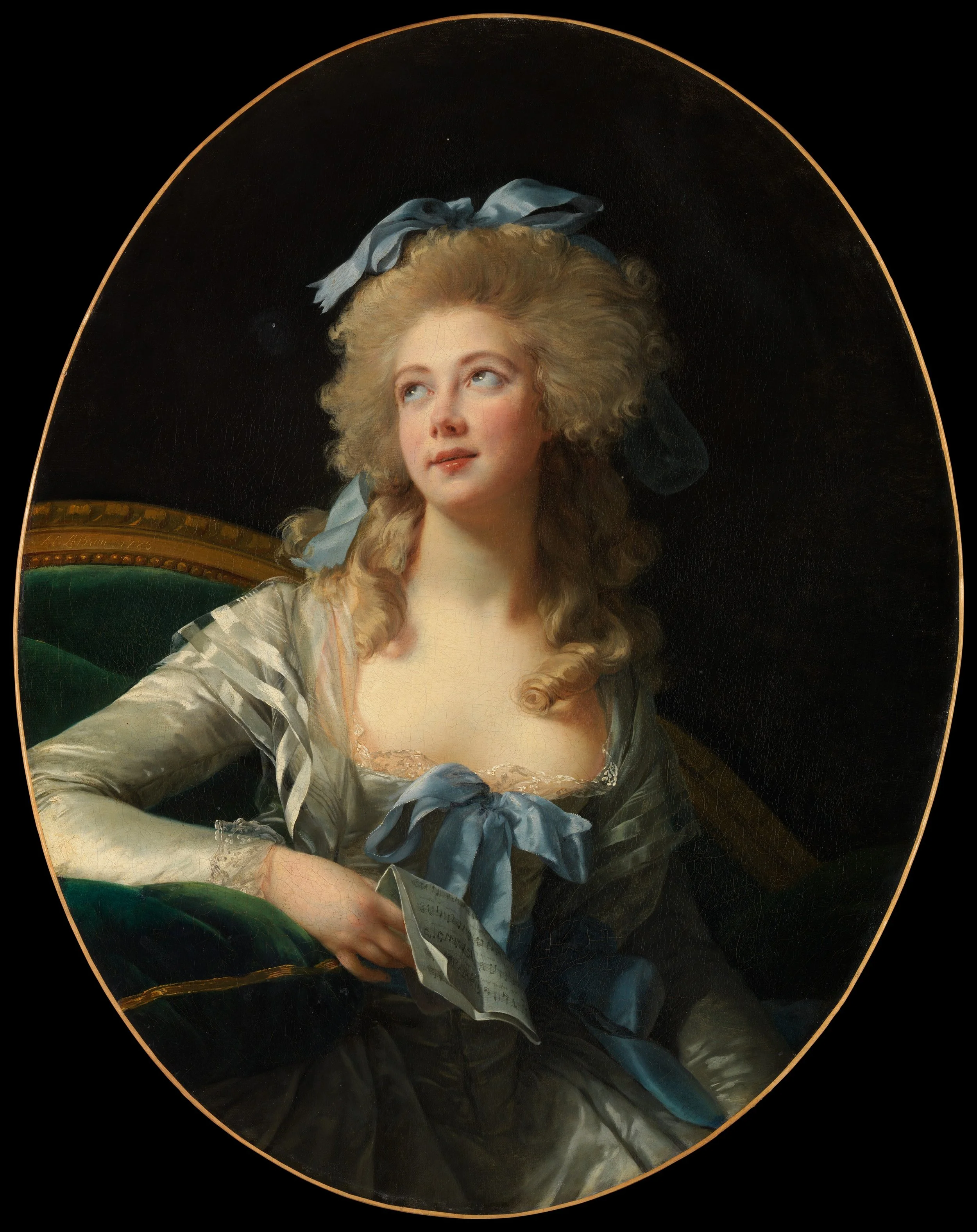
Élisabeth Louise Vigée Le Brun, Madame Grand (Noël Catherine Vorlée, 1761–1835), 1783. Oil on canvas. Collection of the Metropolitan Museum of Art, New York.
The art world loves neat explanations for why certain artists become historically important and subsequently, expensive. “Beauty and skill” for the old masters, “ideas” for the twentieth century, “identity” for the twenty-first. Clean. Satisfying. Incomplete.
What actually holds across centuries is simpler and sharper: the market ends up paying for influence. Not influence as in Instagram reach, but real influence: what changed, what stuck, what other artists had to respond to, what museums had to absorb, what collectors had to reckon with.
The complication is that influence doesn’t look the same in every era. The ecosystem changes, so the “proof” of influence changes too. The trick is learning to recognize the kind of influence a period rewards without confusing it as fashion.
When Skill Was Necessary
For a long stretch of Western art history, technical ability wasn’t the differentiator, but it was the baseline. What separated careers wasn’t only who could paint, but who could enter the rooms where painting mattered: patrons, courts, salons, academies, and the machinery of reputation.
This is where people get too moral or too simplistic. It’s not just “women were excluded.” It’s that value was manufactured inside a patronage system, where patronage was power and power had gatekeepers. In that structure, an artist’s market wasn’t built by “demand” in the modern sense; it was built by access to commissioning, visibility, and the right networks to keep the work circulating.
That’s why someone like Élisabeth Vigée Le Brun matters as an example: not because we need to “recover” her, but because her career shows the equation clearly. Portraiture wasn’t only depiction; it was social technology and she had both the technical skills and the emotional skills to insert herself in the rooms that mattered. In that ecosystem, skill got you in the door. But placement, who sat for you, where the work lived, who saw it – that decided whether your name endured.
The 20th Century Premium: Invention, Not Refinement
Then the rules shifted. The 20th century turned “skill” into table stakes. It began paying a premium for a new visual grammar. This is the advent of the work that didn’t just do the old thing better, but changed what the old thing even was.
This is why the century ends up looking like a relay race of movements. Not because artists were addicted to novelty, but because institutions and markets learned how to reward invention. Creating a language other artists can’t ignore becomes a kind of power. You don’t have to like the work. You just have to admit it changed the terms.
Kazimir Malevich is useful here precisely because he’s not “beautiful” in the traditional sense. Black Square is a declaration that painting can be a proposition, not a window. That move of reducing, stripping, and inventing retrained what viewers expect art to do. The artists who pulled off this rerouting became foundational, because foundations are what museums and markets ultimately consolidate.
The 21st Century: More Visibility
Now we’re in a different environment. The internet produced an endless feed. Visibility is cheap. Attention is engineered. The result is a market where it’s easy to mistake circulation for importance.
Influence today often shows up in two ways that don’t look like 20th century “revolutions.” One is changing the interface and altering how images behave, circulate, or occupy space. Think Wolfgang Tillmans, whose influence isn’t only the photograph, but the way photography can live architecturally and emotionally in a room, like a visual argument rather than a single framed object.
The second is what I’d call weather: an artist builds a coherent psychological climate over decades, so distinct that the work becomes instantly legible without being repetitive. That’s why someone like Hernan Bas is a strong example: not because he represents a movement, but because he represents authorship. A 25-year body of work that remains unmistakable is its own form of influence. In an era of constant scrolling, coherence is not a nice-to-have but a survival trait.
What to Look At
If you want a more accurate frame than “skill vs. concept vs. identity,” it’s this: value follows influence, and influence follows the ecosystem. The ecosystem decides what gets amplified: patronage, invention, visibility, coherence. The artists who master that era’s conditions are the ones who last.
The punchline is that the rules aren’t fixed, but they’re not random either. They leave fingerprints. And once you learn to read those fingerprints, you stop arguing about “what counts” and start noticing what’s actually being built.