
The Groove 279 - Gen Z Has Entered The Art Market
Welcome to the 279th issue of The Groove.
I am Maria Brito, an art advisor, curator, and author based in New York City.
If you haven’t done so, please subscribe here, to get The Groove in your inbox for free every Tuesday.
GEN Z HAS ENTERED THE ART MARKET
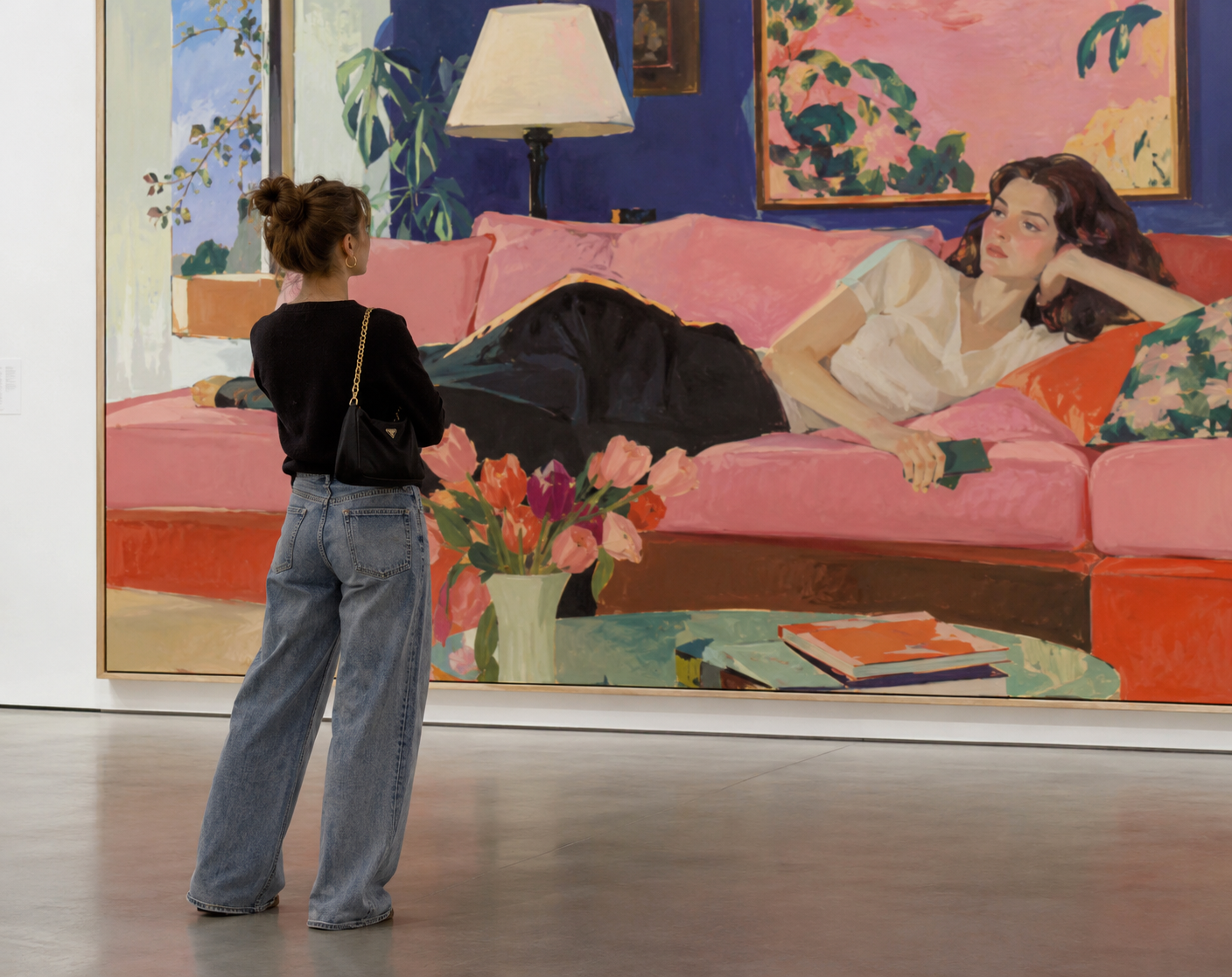
Gen Z art collectors spent $347,000 in average in 2025. More than any other generation, according to the 2026 Art Basel and UBS collector survey.
We’re constantly being told that Gen Z can’t afford a house, struggles with the cost of living, and may never accumulate the wealth their parents enjoyed. So imagine my surprise when I learned that wealthy Gen Z collectors spent an average of $347,460 on fine art in 2025. That’s more than twice the average of any older generation surveyed by Art Basel and UBS.
For comparison, Gen X collectors averaged only $79,000, Millennials $83,000 and Boomers $165,000. Apparently, some young people have skipped the starter apartment and gone straight to the art collection.
Before anyone starts interrogating their 25-year-old about why they haven’t bought a Kusama, a little context:
The survey covers high-net-worth collectors, and its Gen Z respondents are between 20 and 29. My own children are 18 and 16, and I don’t see either one acquiring a six-figure painting anytime soon. But among these exceptionally wealthy young collectors, the numbers are astonishing: 13% spent more than $1 million on fine art in just the first six months of 2026, compared with 3% of all respondents. The more interesting questions are where this money comes from and what happens when the next generation starts deciding how to spend it.
Thanks, Mom and Dad. I’ll Choose the Painting
Here’s something that might explain those impressive bank accounts: 37% of Gen Z respondents identified family-related sources as their primary source of wealth, compared with 15% of the full sample. And 40% said family influence introduced them to collecting.
It’s much easier to navigate the art world when you’ve grown up visiting galleries, meeting artists and listening to conversations about acquisitions over dinner.
Some people inherit the family silverware while others inherit Larry Gagosian’s cell phone number.
But an introduction isn’t a lifetime subscription to your parents’ taste.
56% of Gen Z collectors bought work by an artist newly discovered to them, compared with 36% of boomers. And 80% reported doing substantial or moderate independent research before purchasing. Family connections may open the doors, but these collectors are increasingly interested in deciding for themselves what belongs on the walls.
This raises an intriguing question about the much-discussed Great Wealth Transfer. We tend to imagine cultural influence passing from one generation to another when the inheritance arrives. But what if that influence is already changing hands? The parents may still own the collection, but their children are introducing new artists, challenging old preferences and developing relationships with galleries. Money doesn’t necessarily have to change hands before taste does.
The TikTok Generation Wants the Real Thing
You might expect a generation raised on screens, memes and endless digital images to be filling their collections with NFTs and whatever the algorithm recommends this week. Instead, 82% of Gen Z respondents purchased paintings, compared with 76% of all collectors surveyed. Painting, that wonderfully old-fashioned tangible business of putting something on a surface, is doing just fine.
A few months ago, I wrote about the fascination with the films Obsession and Backrooms, and how younger audiences seem drawn to strange, immersive worlds rather than experiences they’ve already seen a thousand times. I wonder whether something similar is happening with art.
When virtually every image is available instantly and is infinitely reproducible, owning an original object becomes a different proposition. Nearly half of Gen Z collectors prioritize rarity or uniqueness, compared with 38% of boomers. Apparently, the generation raised on unlimited content has developed quite an appetite for things that cannot be copied.
This doesn’t mean they’re all buying the same artists, or that they’re abandoning art history. In fact, discovering an artist for the first time doesn’t necessarily mean discovering a young artist. They might be buying someone who’s been dead for 100 years. The important distinction is that access to information allows collectors to form their own opinions, even when the money and the introduction to art came from an earlier generation.
Post Everything Except the Picasso
Now for my favorite contradiction. Gen Z has grown up documenting practically everything: vacations, relationships, breakfast, the emotional consequences of a bad haircut. Yet 39% of these collectors restrict access to their collections to members of their household or close circles, making them the most private generation surveyed. So much for the assumption that every expensive acquisition needs an Instagram announcement.
Perhaps privacy is becoming a luxury in itself. When everyone can broadcast what they own, choosing not to becomes its own form of distinction. And there may be practical reasons, too: security, discretion and the desire to enjoy art without turning every purchase into a public performance. We shouldn’t assume all these collectors have the same motivations, but the contrast is fascinating.
For years, the art world has been preparing for the day when younger generations inherit enormous fortunes and start reshaping collections. Judging by this survey, some have already arrived, armed with family connections, their own research, and surprisingly expensive taste. The next generation is deciding which parts of the family art collection are worth keeping and which paintings they would rather choose for themselves.