
The Groove 282 - The Art Market Has an Insider Information Problem and Now You Can Bet on It
Welcome to the 282nd issue of The Groove.
I am Maria Brito, an art advisor, curator, and author based in New York City.
If you haven’t done so, please subscribe here, to get The Groove in your inbox for free every Tuesday.
THE ART MARKET HAS AN INSIDER INFORMATION PROBLEM AND NOW YOU CAN BET ON IT
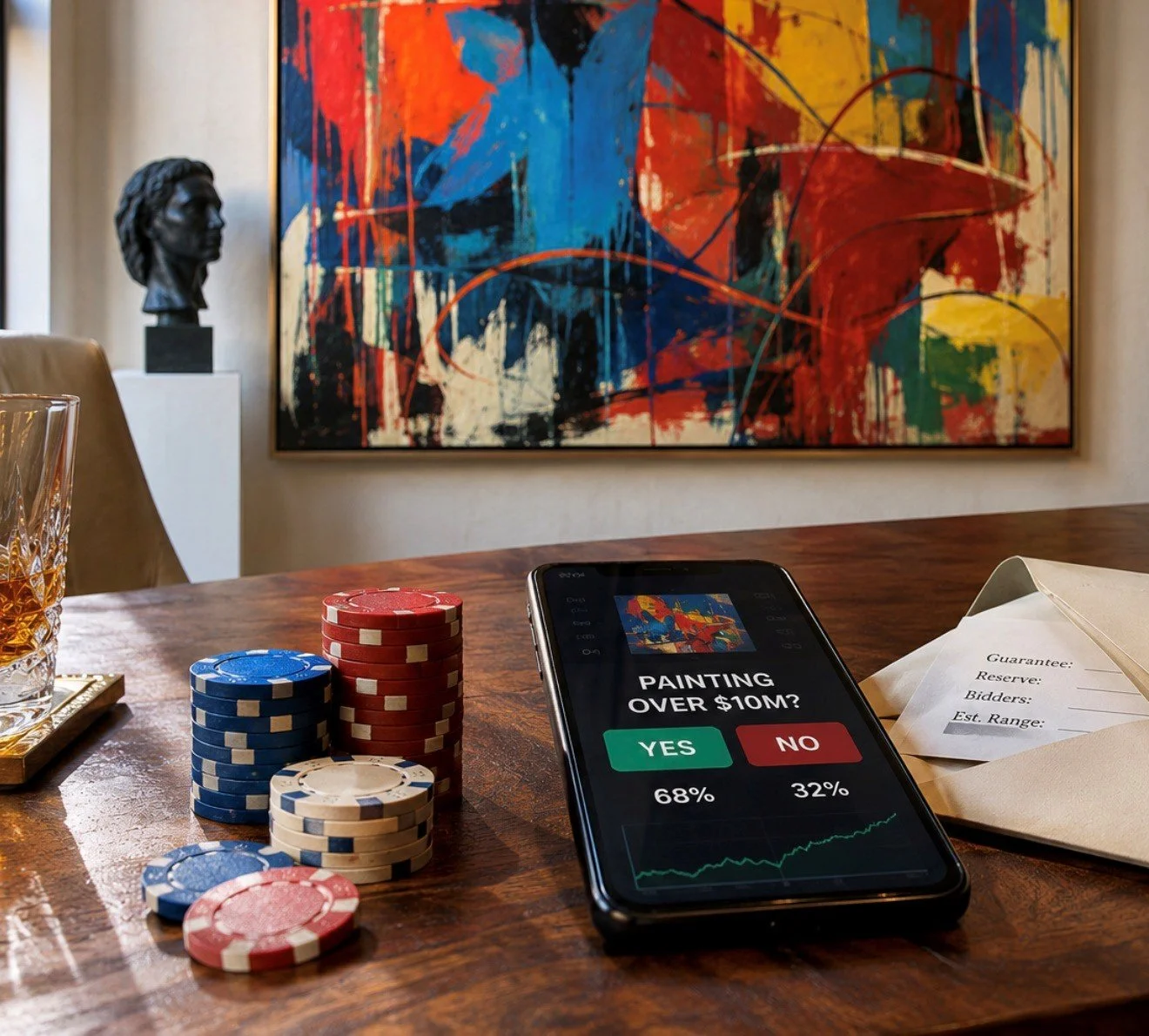
Last week, Artnet and Kalshi announced their partnership to bring prediction markets to art auctions. What could possibly go wrong?
Classified intelligence seems to be the ultimate betting hack. This past January, a U.S. soldier made nearly $410,000 in profit betting on Nicolás Maduro’s capture by using secret military information. He’s been charged and pleaded not guilty, but here’s the kicker: Kalshi reportedly blocked him from opening an account, so he placed his bets on rival Polymarket. Talk about having the ultimate insider tea.
Last week, Artnet and Kalshi announced their partnership to bring prediction markets to art auctions. Will that Van Gogh break $200 million? Will a Basquiat smash its estimate? Place your bets! Except there’s one tiny detail: the art market runs on confidential information, and some people know more than others. What could possibly go wrong?
WELCOME TO THE AUCTION CASINO!
Kalshi lets people trade yes-or-no contracts on auction results without buying a single painting. Artnet supplies the data to verify outcomes and settle the bets. Think of it as fantasy football for art nerds, except the stakes are real money.
Here’s the catch. Auction estimates are public, but reserves, maximum absentee bids, and the financial details of guarantees are generally confidential. Specialists, guarantors, and certain other insiders can possess information that the rest of us would kill to know.
Imagine betting on whether a painting will clear $10 million while someone else already knows two absentee bidders have committed more than that. The final price isn’t guaranteed, but that’s one hell of a head start. Good luck competing with someone who has already peeked at the answer sheet.
Spoiler Alert: The Auction Has a Safety Net
Here’s some juicy intel. According to Artnet, 64.2% of the estimated value of New York’s seven major evening sales this November was already covered by guarantees. That’s roughly two-thirds of the expected value that has a financial safety net before the auctioneer even picks up the gavel.
There’s nothing inherently shady about guarantees themselves. They protect sellers and help auction houses land trophy consignments. Their existence is disclosed, but the actual amounts and financial arrangements generally remain confidential. Insiders get the numbers. Everyone else gets a tiny symbol in the catalogue. Cute.
And here’s where things get spicy. A guarantee doesn’t dictate the final hammer price, but knowing its terms can give someone an enormous informational advantage. Now imagine turning that knowledge into a prediction-market bet. Suddenly, knowing who’s backing a painting might be more valuable than knowing anything about the painting itself.
Who’s Got the Inside Scoop?
To its credit, Kalshi has rules prohibiting consignors, bidders, guarantors, involved auction-house employees, and others with privileged information from trading on these contracts. Sounds reassuring. But how do you police a business where confidential information travels through advisors, dealers, collectors, and intermediaries over cocktails?
Here’s another plot twist: Under Kalshi’s new artwork-price contract rules, a painting recorded as sold can determine a winning bet even if the transaction is later cancelled or never paid for. Artnet’s database becomes the official scorekeeper, while Kalshi controls the settlement process. Make that make sense.
The irony is fascinating. The people who know the most about an auction are precisely the people Kalshi says can’t bet on it. Everyone else gets to gamble on estimates, gossip, and a prayer. The art market has always had its insiders. Now it has a betting window, too.